Showing posts with label Future Technology. Show all posts

Thursday, 17 April 2014

Are we facing another housing bubble?

In a housing or real estate bubble, home prices inflate because of overly optimistic speculation that they'll keep rising. When people can't afford to keep up, the bubble bursts. Demand for homes decreases, while supply goes up and home prices drastically drop.Today, certain markets across America are seeing home prices go up so quickly that people are starting to worry about another bubble. So where do we stand?From 2000 to 2006, home prices were skyrocketing. Why? It was fueled by overly-optimistic speculation on real estate, careless lending standards and very low mortgage rates. At the height of the bubble, homes were overvalued by 39%.

Also see: Shark Tank Secrets of Success -- Building an Untouchable Career

Built on that shaky foundation, when prices cooled millions of people defaulted on their mortgages and the bubble didn’t just burst, it exploded, creating the biggest real estate and credit crisis in modern history.

Fast-forward to the present day, and we’re still in recovery mode. With tighter lending standards it’s harder to buy a home, but in the past two years certain markets have seen prices rise rapidly again, leading some to wonder if history will soon repeat itself.

One area that’s heating up is California — the most overvalued market in the nation. Prices there have increased about 17% year-over-year, with Orange County being the hottest metro area. The increases in California are more generally due in part to investors taking up the tight supply and tech millionaires willing to pay premium prices. The other overvalued metros, like Honolulu, Austin and Miami, are also dealing with high demand and tight supply.
Imagine an urban parking garage, emptied of its cars and filled instead with dozens of parking-spot-size homes.

It’s the vision of a group of more than 80 students, alumni and educators from the Savannah College of Art and Design in Georgia. They have been experimenting with these car-sized homes, called SCADpads, that could be plunked into any parking garage and instantly provide housing in overpriced downtown areas of major cities. The units are prototypes for urban housing, but students will live in them first to test out the concept.
“We’re targeting decks built in the middle of the 20th century, located in the heart of a city,” says Christian Sottile, dean of the school of building arts at SCAD. “Many of these were built as fallout shelters and will basically be there until the end of time.”

For its experiment, the folks at SCAD built their beta SCADpad neighborhood in the college’s midtown Atlanta parking garage, with incredible views of the city’s sprawling skyline. They took over the fourth floor of the garage, using eight parking spaces to create the three pads. The pads reflect the design aesthetics of the college’s three campuses: SCADpad North America for its Savannah campus, SCADpad Europe reflecting the campus in Lacoste, France, and SCADpad Asia reflecting its Hong Kong campus. Each pad takes up two parking spaces—one for the unit itself and the other for an outdoor garden area—and then there’s space for the community garden and a workbench.Of course, it is no ordinary workbench. It features a 3D printer, capable of printing almost anything a SCADpad resident could want, from dishes to wallpaper to furniture. Residents design their products without keyboard or mouse and instead use their hands in front of an interactive camera to manipulate the computer screen—think of Tom Cruise in “Minority Report.”

“A big part of what we have here is the ability to custom-adjust,” says Victor Ermoli, dean of the school of design at SCAD. “If you need a cooking pan, you go to the bench outside and print that. Whatever your needs are, you can meet them.”

That kind of flexibility is necessary, because inside the pads, “every cubic inch of this space counts,” Ermoli says. The units are only 8 feet wide and 16 feet long, so a grown man standing in one can nearly touch the walls and ceilings when his arms are spread out. There’s room enough for a bed, a sitting area, a bathroom with toilet and sink, and a small kitchen that hides its appliances, like the refrigerator and freezer, inside its cabinet drawers.

These walls do talk

There’s also a long list of technological features. The whole unit is controlled by a tablet—there are no light switches —and the power can be turned off completely by blowing on what Ermoli calls a digital candle, which looks like a glowing triangle near the door of the unit.

The walls can be changed out with new 3D-printed designs, and some walls make certain noises, such as tweeting birds, when touched. With the touch of a button, the windows can be frosted over for privacy, and the bathroom mirrors can remind you to wash your hands. A daylight harvesting system captures light coming in the sides of the garage and channels it over fiber optic cables to the garden, Sottile says.

And because the units are the size of cars, they could theoretically be taken on the road and travel with their owner to a new city, where a different parking garage could be its home, Sottile says.

Students living in the units will test the concept out while the college considers questions of scalability. As it stands now, the cost of a basic unit would be around $40,000 and can be produced in two months, Sottile says. The cost to rent them would be about 40 percent below the median rent price in a city.
Michaels Stores, the biggest U.S. arts and crafts retailer, on Thursday confirmed that there was a security breach at certain systems that process payment cards at its U.S. stores and that of its unit, Aaron Brothers.

The company said in January that it was working with federal law enforcement officials to investigate a possible data breach.

Michaels Stores said the breach, which took place
between May 8, 2013, and Jan. 27, 2014, may have affected about 2.6 million cards, or about 7 percent of payment cards used at its stores during the period.The company said about 400,000 cards were potentially impacted at its Aaron Brothers unit by the breach, which occurred between June 26, 2013, and Feb. 27, 2014.There was no evidence that data such as customers’ names or personal identification numbers were at risk, Michaels Stores said in a statement.This is the second known data breach since 2011 at Michaels.Michaels, whose major investors are Blackstone Group LP and Bain Capital LP, said cyber-security firms it hired found that malware not encountered previously had been used in the latest attack.

The company said it was working with law enforcement authorities, banks, and payment processors, and that the malware no longer presents a threat.

Michaels, which resubmitted its IPO documents late last month following a restructuring, is the latest U.S. retailer whose systems have been breached.

Last year, the No. 3 U.S. retailer Target suffered a massive security breach that resulted in the theft of some 70 million customer records.

Reuters reported in January that smaller breaches on at least three other well-known U.S. retailers took place and were conducted using similar techniques as the one used on Target.

U.S. retailers are planning to form an industry group for collecting and sharing intelligence in a bid to prevent future attacks.

Michaels, which owns several private brands such as Recollections, Artist’s Loft, and Loops & Threads, competes with Hooby Lobby Stores, Jo-Ann Stores, and Wal-Mart Stores.

Thursday, 5 December 2013

Education Technology Latest News

Research confirms that consumers view aluminum as more of a premium perception product than plastic. Aluminium is also recyclable product then plastic and has a much lower overall environmental impact than
plastic so customer want to see more aluminum then plastic. Manufacturers also know that using aluminum creates premium positioning for their product and brand.

Now the strategy is to partner with OEM customers and their global supply chains to bring new and exciting aluminum solutions to the market. Alcoa’s offerings to the consumer electronics market include aluminum sheet available in a number of finishes, textures and colors.
To learn more about the Alcoa Consumer Electronic market then you can visit

Monday, 2 December 2013

Humanity is at a crossroads tecnology

The world of 2050 is a world of contrasts and paradoxes.On the one hand, science and technology have continued to advance in response to emerging crises, challenges and opportunities.This has created radical
transformations in genetics, nanotechnology, biotechnology and related fields.On the other hand, many of these same technologies have been so disruptive that it has led to a more frightening, unpredictable and chaotic world than ever before.Humanity is now at a crossroads that will determine its future path for centuries to come – survival or destruction, prosperity or collapse.Some of the most cherished political, economic and social structures have been turned on their heads.In a sense capitalism remains the dominant economic model but is now evolving drastically in response to ecological impacts resource scarcity demographic trends technology and a host of other factors.The endless consumer culture that was prevalent throughout the first world has all but collapsed, replaced by a societal need to conserve.Though there are still many wealthy people around, money is concentrated in a shrinking upper class.By 2050 traditional free market capitalism is largely viewed as a broken system.As more and more wealth trickles upwards to the hyper-rich elite there is a growing consensus that money itself – the profit motive – is a major obstacle to future progress and a new driving force may be required for civilisation to flourish.Debates are raging on what reforms to make in order to adapt societies to this rapidly changing world. People everywhere sense that a great transition is approaching, the likes of which has never been seen before in all of human history. It is clear that some new global paradigm will appear; but it is still unclear what this will be.

Decades of stagflation have produced a fragmented chaotic and perpetually sluggish global economy.Nearly half of the world's nations have junk credit ratings effectively making them bankrupt.US national debt has now reached almost 400% of GDP far exceeding even the levels seen during World War II.China and India though surpassing the US in overall GDP have also stagnated.In the face of economic catastrophe international politics has faced enormous challenges. Although the number of democratic countries has risen significantly over the years many have turned inward, cutting off foreign relations.Revolutions wars and failed states have produced a strikingly different geopolitical map than seen at the beginning of the century.To repair and maintain the fabric of society an increasing number of regions have abandoned their national currencies in favour of interest-free non-fiat non-inflationary local ones.Decentralised cash systems such as the Bitcoin and other electronic alternatives have also exploded in use.Social systems are under extraordinary stress today. The younger generations are increasingly resentful towards the elderly – seeing them as the cause of many problems, and a drain on capital as the ratio of workers to seniors continues to fall.The rich and poor have continued to grow apart, now that upward social mobility has become next to impossible.Massive protests outside corporate HQs and gated communities are a daily reality on the news.Global warming has created almost 150 million climate refugees: a sixfold increase compared to 2010.The influx of people to foreign lands has put a further strain on economies. Resentment towards migrants has produced an upsurge in nationalism with many isolationist parties sweeping government elections. To maintain order and stability, martial law and military occupation is a feature of many cities around the globe. Radical new political parties and movements have emerged, advocating the overthrow of the reigning system.
Recycling and waste management – for decades neglected by many countries – are among the issues now taking centre stage.New regulations and market pressures have forced corporations to move away from the model of planned obsolescence and mass production, to one of conservation and responsibility.Most firms no longer sell entirely new models of their products when technological advances are made. Instead replacement components and upgrades form the bulk of profits with items made of universally interchangeable parts. In a world of increasing resource conflicts doing more with less has become an essential mantra.A system is also employed whereby customers return products at the end of their life cycle to be used as materials for the next generation.In some of the worst-hit countries, mandatory resource dumps are organised in which citizens are obligated to recycle any unnecessary possessions.Naturally such systems are highly controversial and intrusive.Meanwhile the widespread use of robots automation 3D printing and other technology has rendered obsolete many traditional human roles.Though industries have made vast improvements in speed and efficiency it has come at the expense of a declining labour force. Consequently, overall government revenues have seen a net reduction.
Radical Islam and its resentment of the West continue to produce new Jihadists.In addition underground groups ranging from those angry at the first world's neglect to anarcho-primitivists have sprung up.By 2050 at least one terrorist nuclear attack on a major world city has been conducted by one of these groups.Large amounts of nuclear material had been missing from Russia since the 1990s and some inevitably fell into the wrong hands.Being orders of magnitude greater than 9/11 the effects of this attack leave a deep psychological scar on many people alive today, fuelling much paranoia and suspicion between nations.
Despite this turmoil, progress has been achieved in cooperating on certain key issues such as global warming. Carbon emissions have fallen substantially compared with 1990 levels thanks to a global carbon tax and the widespread deployment of solar wind and wave power together with 4th generation nuclear. Fossil fuel reserves were declining in any case.Fusion power is also becoming available now and is being adopted by some of the leading nations.Orbital solar is another emerging industry.Energy efficiency and conservation have provided further reductions in CO2 output.However carbon emissions from earlier decades remain locked into the system.This delayed reaction will continue to affect weather patterns and climate stability as will the ongoing destruction of the Earth's rainforests some of which are transitioning from carbon sinks to carbon sources.Sea levels have risen over a foot by now and are beginning to affect much of the world's coastal real estate.Large-scale carbon capture and sequestration appears to be humanity's last and only hope of reversing these trends.

latest furture technology

This car will be emulated of future expertise and world. I shocked when I gaze this vehicle. This vehicle conceives is very newest and strong. This vehicle has no motors, no drivers, no bounds and no guiding
wheel. This vehicle is shock of the future. This vehicle types is very distinct. The visibility is unpredictable, converging high newest tendency and high know-how. The vehicle very newest conceive that no motor, no direct wheel, and petroleum-free. The designers came out with actually exclusive revolutionary notions. It has least important heaviness and perfect aerodynamics, reduced adversaries mobility, and very effective. After all, I like this vehicle because it conceives motor. And Color. General is very newest. It’s very fantastic.

Sunday, 1 December 2013

Communication Future Technology

Text messaging, online interaction and mobile media have already transformed the ways we communicate. The Pew Research Center reports that 56% of Americans now own smartphones. On an average day, 36.6
billion messages are sent via SMS-text message or chat apps like iMessage and WhatsApp. By 2014, that number is expected to surpass 50 billion messages. An increasing number of us spend most of our days using some form of electronic communication to manage workplace and personal relationships.

At the same time, few things can ruin a relationship faster than a miss-timed text or a message taken out of context. A report from Forbes, candidly entitled “Don’t Include Me On a Group Text Message Unless You’re Trying to Punish Me,” reminds us that the rules for proper e-communication etiquette are changing almost as quickly as the technology itself. Because communication technology holds such a prominent place in our daily lives, it’s more important than ever to consider how text messaging, email, and other mobile media are also changing how we build and maintain relationships.

The Upside

When it comes to the upside of communication technology, some of the most promising aspects involve improving collaboration and strengthening existing relationships. Initially, consumers are making good on professional and educational technologies that allow for increased collaboration. Three of the biggest providers of Cloud technology – Dropbox, iCloud, and SkyDrive – report a combined 675 million users. Google’s new(ish) Drive provides not only online storage, but also a platform for synchronous document editing across remote locations.

These types of technologies in addition to text messaging, instant messaging, and video-conferencing have created increased opportunities for convenient collaboration across time and space. In doing so, human communication experts argue that workplace relationships are strengthened in several key ways:

    Co-workers develop close relationships that some describe are as comfortable as friendships. Text messaging, instant messaging and social networking at work allow employees convenience and efficiency in their communication, so these relationships develop rather quickly.
    Employees also enjoy increased task interdependence, in that they can use communication technology to manage each other’s availability. When individuals are collaborating on a project, sometimes a quick text message or Google chat is appropriate to answer technical questions, without getting bogged down with the small talk that sometimes accompanies a face-to-face interaction.
    Finally, employees often create a sense of community around their online collaborations. Communication technology simply brings more people to the table, allowing individuals to grow their social networks and online communities in ways previously limited by time and space. Such features are important in an expanding global marketplace.

These benefits of communication technologies are also evident in personal relationships. In an increasingly competitive and unpredictable economy, more families are living apart for employment purposes. This rise includes not only extended families, but also spouses and their children. As such, text messaging, videoconferencing, and mobile media are often vital technologies that families need to keep in touch. Additional benefits include:

    A strengthening of existing relationships. Whereas text messaging is not always the most effective way to initiate and form a relationship, mobile communication devices help existing bonds stick together.
    Combatting loneliness. One of the biggest risks that long-distance relationships face is loneliness, and videoconferencing, in particular, helps to alleviate the burdens of maintaining relationships across great distances.

The Downside

As more and more devices, programs, and platforms are developed, it is important to take a practical and somewhat cautiously optimistic approach to this topic – especially because of the downsides of our growing reliance on communication technologies. The drawbacks also focus on workplace and interpersonal relationship maintenance.

As workplaces become more connected and collaborative, there is a growing concern among organizational scholars that we’re becoming too plugged in. Employees are expected to do more with fewer resources, a phenomenon that Communication scholar Sharon Kleinman called the “culture of efficiency.” Communication technologies are a part of this culture, because they are believed to help speed up several of our workplace interactions. However, there are consequences for this emphasis on efficiency. Colleagues have grown to expect immediate responses to a text message. Employees are expected to respond to emails and text messages after work hours. These changes in communication practices also place significant burdens on workplace relationships.

    Managers and supervisors now assume that their employees are “always on.” This can lead to work-family spillover, where individuals take time away from their personal relationships to deal with their workplace relationships – often without compensation.
    The assumption of “always on” also increases the likelihood for employee burnout or other productivity problems – especially when individuals spend more and more of their days answering text messages and emails than doing the work that they’ve been hired to do.
    Finally, if communication technologies have made workplace relationships more like friendships, then missing a text or failing to respond to an email immediately can prompt a much harsher reaction from our co-workers.

The workplace is not the only space where communication technologies often make our relationships more challenging. On an interpersonal level, text messaging, email, and videoconferencing do keep us more connected; however, they are not a magical fix for all relationship maintenance problems. Psychology Professor Mark Becker from Michigan State has argued that media multi-tasking, or using multiple communication technologies at once, is directly linked to increases in anxiety and depression. Communication scholar Lisa Stafford outlines some additional downsides that we might encounter when it comes to communication technology and personal relationships:

    A loss of privacy and control. Individuals have little control over the texts or emails that they send, pictures that they post, or other communications that they put on the Internet. Those messages can be forwarded by well-meaning friends or family members in ways that the original sender never intended.
    Paradox of constant connection. Text messaging can help romantic partners stay close even when they are apart; however, some partners get annoyed when their significant other interrupts them during work or time with their friends.

Making the Most of Communication Technology

Text messaging, online interaction and mobile media have already transformed the ways we communicate. The Pew Research Center reports that 56% of Americans now own smartphones. On an average day, 36.6
billion messages are sent via SMS-text message or chat apps like iMessage and WhatsApp. By 2014, that number is expected to surpass 50 billion messages. An increasing number of us spend most of our days using some form of electronic communication to manage workplace and personal relationships.

At the same time, few things can ruin a relationship faster than a miss-timed text or a message taken out of context. A report from Forbes, candidly entitled “Don’t Include Me On a Group Text Message Unless You’re Trying to Punish Me,” reminds us that the rules for proper e-communication etiquette are changing almost as quickly as the technology itself. Because communication technology holds such a prominent place in our daily lives, it’s more important than ever to consider how text messaging, email, and other mobile media are also changing how we build and maintain relationships.

The Upside

When it comes to the upside of communication technology, some of the most promising aspects involve improving collaboration and strengthening existing relationships. Initially, consumers are making good on professional and educational technologies that allow for increased collaboration. Three of the biggest providers of Cloud technology – Dropbox, iCloud, and SkyDrive – report a combined 675 million users. Google’s new(ish) Drive provides not only online storage, but also a platform for synchronous document editing across remote locations.

These types of technologies in addition to text messaging, instant messaging, and video-conferencing have created increased opportunities for convenient collaboration across time and space. In doing so, human communication experts argue that workplace relationships are strengthened in several key ways:

    Co-workers develop close relationships that some describe are as comfortable as friendships. Text messaging, instant messaging and social networking at work allow employees convenience and efficiency in their communication, so these relationships develop rather quickly.
    Employees also enjoy increased task interdependence, in that they can use communication technology to manage each other’s availability. When individuals are collaborating on a project, sometimes a quick text message or Google chat is appropriate to answer technical questions, without getting bogged down with the small talk that sometimes accompanies a face-to-face interaction.
    Finally, employees often create a sense of community around their online collaborations. Communication technology simply brings more people to the table, allowing individuals to grow their social networks and online communities in ways previously limited by time and space. Such features are important in an expanding global marketplace.

These benefits of communication technologies are also evident in personal relationships. In an increasingly competitive and unpredictable economy, more families are living apart for employment purposes. This rise includes not only extended families, but also spouses and their children. As such, text messaging, videoconferencing, and mobile media are often vital technologies that families need to keep in touch. Additional benefits include:

    A strengthening of existing relationships. Whereas text messaging is not always the most effective way to initiate and form a relationship, mobile communication devices help existing bonds stick together.
    Combatting loneliness. One of the biggest risks that long-distance relationships face is loneliness, and videoconferencing, in particular, helps to alleviate the burdens of maintaining relationships across great distances.

The Downside

As more and more devices, programs, and platforms are developed, it is important to take a practical and somewhat cautiously optimistic approach to this topic – especially because of the downsides of our growing reliance on communication technologies. The drawbacks also focus on workplace and interpersonal relationship maintenance.

As workplaces become more connected and collaborative, there is a growing concern among organizational scholars that we’re becoming too plugged in. Employees are expected to do more with fewer resources, a phenomenon that Communication scholar Sharon Kleinman called the “culture of efficiency.” Communication technologies are a part of this culture, because they are believed to help speed up several of our workplace interactions. However, there are consequences for this emphasis on efficiency. Colleagues have grown to expect immediate responses to a text message. Employees are expected to respond to emails and text messages after work hours. These changes in communication practices also place significant burdens on workplace relationships.

    Managers and supervisors now assume that their employees are “always on.” This can lead to work-family spillover, where individuals take time away from their personal relationships to deal with their workplace relationships – often without compensation.
    The assumption of “always on” also increases the likelihood for employee burnout or other productivity problems – especially when individuals spend more and more of their days answering text messages and emails than doing the work that they’ve been hired to do.
    Finally, if communication technologies have made workplace relationships more like friendships, then missing a text or failing to respond to an email immediately can prompt a much harsher reaction from our co-workers.

The workplace is not the only space where communication technologies often make our relationships more challenging. On an interpersonal level, text messaging, email, and videoconferencing do keep us more connected; however, they are not a magical fix for all relationship maintenance problems. Psychology Professor Mark Becker from Michigan State has argued that media multi-tasking, or using multiple communication technologies at once, is directly linked to increases in anxiety and depression. Communication scholar Lisa Stafford outlines some additional downsides that we might encounter when it comes to communication technology and personal relationships:

    A loss of privacy and control. Individuals have little control over the texts or emails that they send, pictures that they post, or other communications that they put on the Internet. Those messages can be forwarded by well-meaning friends or family members in ways that the original sender never intended.
    Paradox of constant connection. Text messaging can help romantic partners stay close even when they are apart; however, some partners get annoyed when their significant other interrupts them during work or time with their friends.

This site features predictions of future technology based upon current emerging tech and inventions plus trends. Emerging tech is exciting in and of itself, but it is nothing compared to future technology 5, 10, 50 and
100 years from now.
One can only envision the future technology that our kids and grandkids will be able to use on a daily basis. Future technology will allow the generation of today to live longer due to advances in medicine, use more high tech computers and electronics than we can now imagine, and drive future cars with no emissions and zero carbon footprints.Not only that but our grandchildren will take advantage of future energy, smart homes and cars, robots and bionics to serve them and make life easier. Future weapons will actually be smarter, more precise and reduce the need for machismo among countries and will encourage non-proliferation.
Future space technology will bring spacecraft to the far reaches of this solar system and beyond. Space tourists will actually get to fly to Mars as in the movie Total Recall. Future education technology will mean students will learn faster, retain information longer, process information and retain memory like we can now not even imagine.
Future electronics will go way beyond the iPad using holograms and other virtual reality technology. What once was believed to be science fiction will simply be known as science.  Future robotic surgery will mean more precision, less complication and faster healing. Medical databases will interact at light speed to give the utmost in patient care for disease and injuries.Future bionics will not only combine man (and woman) and machine, but also artificial intelligence with human intellect. Questions such as what is the mind, consciousness and the soul will be answered and integrated between neurons and electronics.
Future homes will not only be smart in a green and energy conservation sense but they’ll also be empowered with robotics, food supply management, facial recognition security, resource and energy management plus so much more.
Cities of the future will efficiently move people are cargo around with leading edge public and private transportation. Food crops will be grown inside large cities and distributed locally. Solar panels and other technology will provide future distributed energy resources to power cities locally.
These pages may hold product and tech reviews of emerging technology but then they’ll be followed by future technology predictions based upon this technology. See for yourself. Then use your third eye and see beyond what your eyes and imagination now tell you is possible.
In future, smart technologies will be available that will be able to detect information about your health just by smelling. This future technology could be smart computers or  phones or other devices. Future technology
will smell one day, this is one of the five future predictions of IBM 5 in 5 article.

According to that future technology prediction, within next five years smart technologies will be able to smell. Smart computers or smart phones will be able to tell one that he or she is going to catch cold even before his or her first sneeze. This will be possible because by smelling that future technology will be able to detect your physical condition before your realization you are going to be sick.
With every breath ,we millions of different molecules expelled by us. Some of this molecules are Biomarkers. This kind of Biomarkers contains data about our current physical condition at any given time. This kind of future technology will be able to detect that Biomarkers and extract data about our health from them.

Computers are developing day by day. Computers are increasingly being able to learn from their successes and mistakes, are being able to process unstructured data , are being able to draw conclusion based on evidence. One day will come when smart computers will be able to sense too.

According to that future technology news, sensors that will smell will be integrated into cell phones or other mobile devices. This sensors will collect information from expelled Biomarkers from our breath. Smart computers will collect that data from them and process them and analyze them to get information about our health.
This kind of future technology is not only a prediction. Now a days we are using breathalyzer to detect alcohol from a breath sample. This kinds of future technology will work like breathalyzer. But this kinds of future technology will be able to detect far more things from our breath. This kinds of future technology will be able to identify liver and kidney disorders, diabetes and tuberculosis, and many other things. IBM researchers is already demonstrated a number of examples of this kind of sensors in their lab. This sensors are relatively simple sensing systems, that  can measure biomarkers down to a single molecule. Computers of that future technology  will be able to constantly learn, as well as combine new and old information from a number of sources. For this reasons, new generations of smart computers are required .

If this prediction of future technology come true that will surely change our life.
- See more at: http://recent-inventions.lv2lvu.com/future-technology-smart-computers/#.Uptiafu58fs
With every breath ,we millions of different molecules expelled by us. Some of this molecules are Biomarkers. This kind of Biomarkers contains data about our current physical condition at any given time. This kind of future technology will be able to detect that Biomarkers and extract data about our health from them.
Computers are developing day by day. Computers are increasingly being able to learn from their successes and mistakes, are being able to process unstructured data , are being able to draw conclusion based on evidence. One day will come when smart computers will be able to sense too.
According to that future technology news, sensors that will smell will be integrated into cell phones or other mobile devices. This sensors will collect information from expelled Biomarkers from our breath. Smart computers will collect that data from them and process them and analyze them to get information about our health.
This kind of future technology is not only a prediction. Now a days we are using breathalyzer to detect alcohol from a breath sample. This kinds of future technology will work like breathalyzer. But this kinds of future technology will be able to detect far more things from our breath. This kinds of future technology will be able to identify liver and kidney disorders, diabetes and tuberculosis, and many other things. IBM researchers is already demonstrated a number of examples of this kind of sensors in their lab. This sensors are relatively simple sensing systems, that  can measure biomarkers down to a single molecule. Computers of that future technology  will be able to constantly learn, as well as combine new and old information from a number of sources. For this reasons, new generations of smart computers are required .
If this prediction of future technology come true that will surely change our life.
- See more at: http://recent-inventions.lv2lvu.com/future-technology-smart-computers/#.Uptiafu58fs
With every breath ,we millions of different molecules expelled by us. Some of this molecules are Biomarkers. This kind of Biomarkers contains data about our current physical condition at any given time. This kind of future technology will be able to detect that Biomarkers and extract data about our health from them.
Computers are developing day by day. Computers are increasingly being able to learn from their successes and mistakes, are being able to process unstructured data , are being able to draw conclusion based on evidence. One day will come when smart computers will be able to sense too.
According to that future technology news, sensors that will smell will be integrated into cell phones or other mobile devices. This sensors will collect information from expelled Biomarkers from our breath. Smart computers will collect that data from them and process them and analyze them to get information about our health.
This kind of future technology is not only a prediction. Now a days we are using breathalyzer to detect alcohol from a breath sample. This kinds of future technology will work like breathalyzer. But this kinds of future technology will be able to detect far more things from our breath. This kinds of future technology will be able to identify liver and kidney disorders, diabetes and tuberculosis, and many other things. IBM researchers is already demonstrated a number of examples of this kind of sensors in their lab. This sensors are relatively simple sensing systems, that  can measure biomarkers down to a single molecule. Computers of that future technology  will be able to constantly learn, as well as combine new and old information from a number of sources. For this reasons, new generations of smart computers are required .
If this prediction of future technology come true that will surely change our life.
- See more at: http://recent-inventions.lv2lvu.com/future-technology-smart-computers/#.Uptiafu58fs
With every breath ,we millions of different molecules expelled by us. Some of this molecules are Biomarkers. This kind of Biomarkers contains data about our current physical condition at any given time. This kind of future technology will be able to detect that Biomarkers and extract data about our health from them.
Computers are developing day by day. Computers are increasingly being able to learn from their successes and mistakes, are being able to process unstructured data , are being able to draw conclusion based on evidence. One day will come when smart computers will be able to sense too.
According to that future technology news, sensors that will smell will be integrated into cell phones or other mobile devices. This sensors will collect information from expelled Biomarkers from our breath. Smart computers will collect that data from them and process them and analyze them to get information about our health.
This kind of future technology is not only a prediction. Now a days we are using breathalyzer to detect alcohol from a breath sample. This kinds of future technology will work like breathalyzer. But this kinds of future technology will be able to detect far more things from our breath. This kinds of future technology will be able to identify liver and kidney disorders, diabetes and tuberculosis, and many other things. IBM researchers is already demonstrated a number of examples of this kind of sensors in their lab. This sensors are relatively simple sensing systems, that  can measure biomarkers down to a single molecule. Computers of that future technology  will be able to constantly learn, as well as combine new and old information from a number of sources. For this reasons, new generations of smart computers are required .
If this prediction of future technology come true that will surely change our life.
- See more at: http://recent-inventions.lv2lvu.com/future-technology-smart-computers/#.Uptiafu58fs

Saturday, 30 November 2013

Cars and future technology involved

The human race has undergone a huge transition in the last century with computers breaking every limit and making every dream a possibility. The flexibility of this machine by microprocessor brought. For a huge
technological advancement in all fields we can imagine outside No wonder that, therefore, it has brought a lot of progress in the automotive industry which is a pioneer for technological advancement From the steam-powered vehicles to hydrogen cars exist, the sky is the limit for the car manufacturers. However, the automotive industry has undergone some tough times in the years 1960 to 1980, when all the car manufacturers use the same technology, almost the same designs. They are focused on making money from their new cars without investing anything for research and development. This attitude of the producers slowed technological advances for new cars and even stopped at a certain point of time. Computers, with a globalized market turned the table for the company of new and revolutionized the automotive industry.Now, companies have realized that new car, investing a considerable amount in the development of future technologies, they will be able to bring stability to their business model that automatically increases the profit of the producers of new cars.Every car manufacturer that produces new cars and services used cards is working towards a common goal, which is to develop a machine that is eco-friendly, which is more efficient, and that is totally secure.
As a result of hard work by the team of research and development of every car company, we already have a glimpse of some wonderful inventions that can be used for both used cars and new cars.Below are given the details of some real inventions that will be given in our cars in the future and so on used cars we have now.Regenerative breaking is a technology in which heat wasted, is produced during the application interruptions is again converted into usable energy, Malthus increasing the energy efficiency of the vehicle. This technology can be imparted in both new and used cars.Researchers at Brunel University (UK) has developed a hybrid engine that compresses the air and converts it into a form that the engine can use, Malthus reducing the fuel consumption of the engine at 30%. This technology can be imparted both new and used cars.Automobile giant BMW has developed a technology called “Turbo steam” that helps you get the heat expelled from internal combustion engines and rates of gene mechanical energy from it. This technology can be given in most new cars than used cars.

Carbon Nano tubes will replace steel, which makes the car safer and more efficient. This technology can only be used in new cars.

Nanotechnology will be imparted in the engines of the car, giving the driver options to change the type of engine. With some basic modifications, this technology can be adopted in the used cars also.

These are the tip of the iceberg that the automotive industry is going to unveil the future. With the new technology coming up every day, automobile giants are always changing the conventional transport system in the world, forever!
Summary: Intel's announcements at its 2007 Developer Forum in San Francisco centred around the availability of its Penryn processors later this year and future plans for its Nehalem microarchitecture, but
CEO Paul Otellini also used the opening keynote to show off some cool prototypes and other fancy equipment.Intel's Montevina chipset for notebook PCs (the successor to Santa Rosa) is due for release in the middle of 2008. Otellini showed off a demonstration system housing one of the first functional Montevina prototypes, which he described as possibly the ugliest laptop ever. What's so wrong with Perspex? Personally, we think the handwritten label is a nice touch.

Future Technology Portal

Future technology is what scientists, futurists and others dream up first, then work hard to make a reality. Future technology encompasses many different areas from nanotechnology, science and medicine, computers
and many other specific areas such as space tourism, future cars, future weapons, 3D printing and many areas of which people have not dreamed yet. Future tech trends may be thought of as either leading edge or "bleeding edge" technology in that this cutting edge is not without its trials and tribulations. For instance, for investors, pouring speculative money into predictions that emerging technology will pay off may not yield results for decades if ever.Money on upcoming tech may be wasted in the eyes of some who decide that caution is the better part of valor. But, for a few mavericks, the payoff is in the project itself, and not necessarily in the economic payoff.Mainstreaming ...
A few people get to have their cake and eat it too when it comes to the tech of the future. The likes of Bill Gates and Steven Jobs (R. I. P.) are a couple of examples of those who have poured time, money and effort into future predictions and forecasts and have been paid handsomely when their dreams have gone mainstream.Nanotechnology is a hot topic right now. Chemistry, applied physics, materials science, electrical and mechanical engineering are all hip deep in nanoscience and nanotechnology.A couple of other trends in tech are future cars and future weapons. The Discovery Channel now has programs on each one of these areas with a growing number of viewers interested in what the future holds.

Futuristic cars may be hydrogen cars, electric cars, hybrid, dual fuel, solar or flying cars or automobiles not yet conceived yet on the drawing board or 3D computer animation program. Fuel cell vehicles are a tempestuous topic right now, but the future is uncertain and there is much room for speculation on which technology will take root in the years to come.

Future weapons are also of great interest to many (think 3D printing and then some). Not only are people wanting to know about such large subjects as America's interest in developing a new hydrogen bomb, but also non-lethal and less lethal weapons of the future. Some of the futuristic weapons can send a heat pulse to disperse and angry mob or emit a beam to freeze a person in his or her tracks.

Monday, 15 October 2012

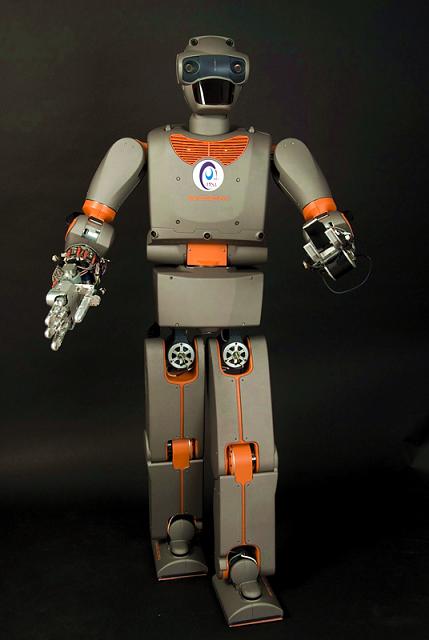
ROBOTS INFILTRATE THE MUSEUM


Circuitous admirable in Washington and manufacturing about 20 museums the Smithsonian Institution with a large number of high tech assets.Increased by more than 100 robots will increase including a lot of acclaimed stand attached accumulated in the history of the United States decades.Visitors will be accepted from April 9 come to worship mini free apprentice car the MARV a free accessories are almost always greater than a penny. As well as on the display: Robbie a humanoid developed by the U.S. Defense Advanced Research Projects Agency DARPA will be the medical records of their appearance assuming feats public.Accept do not accept the the busy Apple novel robot is abandoned Smithsonian. R2 D2 the acclaimed's Apprentice Star Wars also makes its entry into
the National Museum of American History.

Monday, 24 September 2012

Solar Impulse Aktiviti agitative prove it: the sun was able to reach the airplanes fly So why did not systematic accouter about our high-tech accessories that they also may be powered by the sun!?

Samsung is trying to do this NC215S netbook.Resolutely objective of sustainable development including
photovoltaic cells on the cover of this mini laptop.It was originally to be released into the Russian market before the launch in other countries.In addition to its green credentials Samsung NC215S is a pretty standard netbook (1GB RAM 1.66 GHz processor and a 250GB hard drive).This is not entirely powered by solar energy which helps save battery power roommates otherwise there is a good performance.NC215S provides over 14 hours of battery life. impressive!

Wednesday, 19 September 2012

BYE BYE DOT COM!

New area extensions will be granted anon for archetype-dot Google dot-msn and so on that will change allowed dot-com This is because ICANN (Internet Corporation for Assigned Names and Numbers) is used new kinds of online abode . names and the many agitative development of the Internet in some divisions century.Only 22 gTLDs or planned top-level namespace manage at the moment however this amount will now shoot as a society organizations can have access to their own, customized gTLDs.Although it will not be cheap anniversary
website extension area will reach $ 185,000 and will accent any choice.Your definition will necessarily be absolute here!

Monday, 17 September 2012

When it comes to the maid teeth toothbrush toothpaste assumptions based accessories will assume the confusion to future time our science and advance.Add hand they may not.

About abnegating ceremony binding toothpaste to absorb your broom receiving daily with blankets your teeth your broom? This is absolutely visit if you use the ability the sun Shiken Soladey-J3X armed.Shiken
Soladey J3X solar absorption extreme poverty send electronic injection through the console of the head. Electronic to meet articulate acerbic suspension of all the bacteria in beef.In the atoms which is its creator Dr. Kunio Komiyama Dr.Gerry Uswak to ensure that our The new solar broom to get the field trying to give us affidavits sound.


But while toothpaste besides cleaning aswell attends to cavities and applique deposits in our mouths there’s no chat of solar ability accoutrement those area as well. 

Forget in your bathroom positive and jumping monster.They will not bother you if you ruled wear new equipment the alternative clothing detergent Harsha Vardhan New Delhi India.What is the best thing in the

apparatus and even does not participate as a recognized mechanical wear
Its structure is similar to a large state-of-the-art flexible armchairs can of course to sit down on it.Is worth mentioning that the new alternative clothes detergent will not let their own flagrant or jump not because some bookish characteristics the new gadget but in fact wear the device does not use baptism bath clothes. Bankruptcy alone with ionized air.This attachment is a washer and dryer.Unfortunately I do not know that this device has a wealth of cost but the actual wear armchair is appropriate - Bravo's abstract.

Solar Powered Bra for your Maximal Comfort

Literally every woman wearing a bra.The embrace of the base station they adapt to the visual and size in order to adapt to the environment.Appropriate bra recommendations were defeated during a workout.


Anatomy with actual ornaments are called wear a bra.However scientists have accumulated rush our new innovation the realization of women's activities increased comfort! This time foreigners of Japanese lingerie maker new equipment the new account seems to be an eco-apple pie accessories - solar battery corset.
The pain of a recognizable bra disposable solar panels ladies no best accept their iPod or mobile phone initiative out of energy.Artifacts and artificial water filled pockets which makes it very easy to break hydrated at all times.New artifacts is characterized by excellent high quality of amoebic cotton authoritative keenly ecologically clean underwear.
Unfortunately artificial does not appear any time soon behind the miracle bra still is the development of the concept of accompaniment.The device also has an insufficient quantity of at desire to eliminate.For example the attachment of bankruptcy has been very obvious to rain or the loss of capacity solar array photographed party clothes.Because of these limitations the assembled Japanese aggregation Triumph International Recognition of anatomy artificial obviously not high demand.In addition the rich will obviously join me on this it is difficult to call this bra decidedly attractive.A little help the part of the previous works of polymerization into a shopping mall you can adapt the chopsticks bag, bra bra.

Smart Bikini Protects From Uv Light

Many girls like attention to their skin in the sun drape adventure.Course for us the sun can accept a degree of independent and sunscreen to ensure that the leather is not enough able-bodied sunbathers encourage the

achievements of the break the best flower blooming in the sun tan.But how do we perceive lined if it is time to retreat? In Canada to develop a new swimsuit, in order to adapt to the the Aegis after tan admonishing balance UV light.
Innovative swimwear is no added than an approved bikini busy Corolla artificial the sharp ultraviolet radiation can change their own blush.Exposure or the average low-emission Corolla white or lavender color.The abnormal the UV discharge amount of the corolla afterglow worse violet alarming precision tanning, should be stopped.
 SmartSwim UV black bikini
Here is a high-tech alternative to the above ideas: Silver Beat SmartSwim UV black bikini.It has a LED UV defeated with congenital into this also shows that it's time to stop sinbahting.The LED UV rhythm is powered by solar energy.
SmartSwim  Bikini Already Available
The A agent Solestorm gathered launched a smart swimsuit with that even admitting that humans are now added to the adverse effects of a familiar environment especially UV shiny new swimsuit attractive exceeded all expectations.Solar UV index Solestrom SmartSwim bikini detector retails for $ 100.The ultraviolet instrument Bikini amount SmartSwim is $ 190.